Glamour Doesn't Cancel Out the Camera
What Kylie Jenner's Meta glasses campaign is really selling
Last month EFF researchers found a dormant facial recognition system called NameTag buried inside the Meta AI companion app, already installed on more than 50 million phones. It converted a stranger's face into a 2,048-number biometric signature and matched it against a stored database. It wasn't active yet. Internal documents reported by the New York Times described a Meta memo that framed launching the feature during a "dynamic political environment," when privacy advocates would be occupied with other fights. Meta pulled the code within 24 hours of getting caught and won't say whether it's coming back.
That wasn't even the first bad month. Back in February, workers at Sama, a Meta subcontractor in Nairobi, told Swedish newspapers Svenska Dagbladet and Göteborgs-Posten they'd been reviewing footage captured by Ray-Ban smart glasses users, including people having sex and using the bathroom. Two months later, Meta quietly ended the Sama contract. 1,108 workers got six days' notice and Meta never specified which standards had been breached, or when.
So when the ad for Kylie Jenner's Meta Starfire glasses landed a few weeks later, my first reaction was annoyance.
As a marketer, I believe Kylie was chosen to sell these glasses to girls, women, and young people in general, and specifically to get them comfortable with being filmed. Putting a famous, relatable woman at the center of the campaign is what makes a camera on someone's face read as aspirational instead of alarming.
The glasses are styled by Kylie. They're also voiced by Kylie. Meta's tagline for the product is "You ask. Kylie answers." Its companion line reads "the best things in life are hands-free." Put that next to Kylie's history as a reality TV star whose entire public life has been filmed and published since she was a child, and next to the campaign imagery of young women wearing the glasses and posing for the camera, and something curious surfaces: this isn't a woman who's ever seemed comfortable being watched. On the May 2026 episode of Jake Shane's Therapuss podcast, Jenner said it's still hard for her to leave her house in LA, and described being screamed at and blocked in by paparazzi at 16 with no security to protect her. She didn't hire security until after she had her daughter. The woman fronting a campaign about making cameras feel normal has spent years describing what it costs to be recorded without consent.
This isn't about hiding the camera. Meta isn't hiding anything, the camera sits right there in every ad. What Kylie is doing is normalizing it by making a visible thing feel unthreatening rather than making a threatening thing invisible.
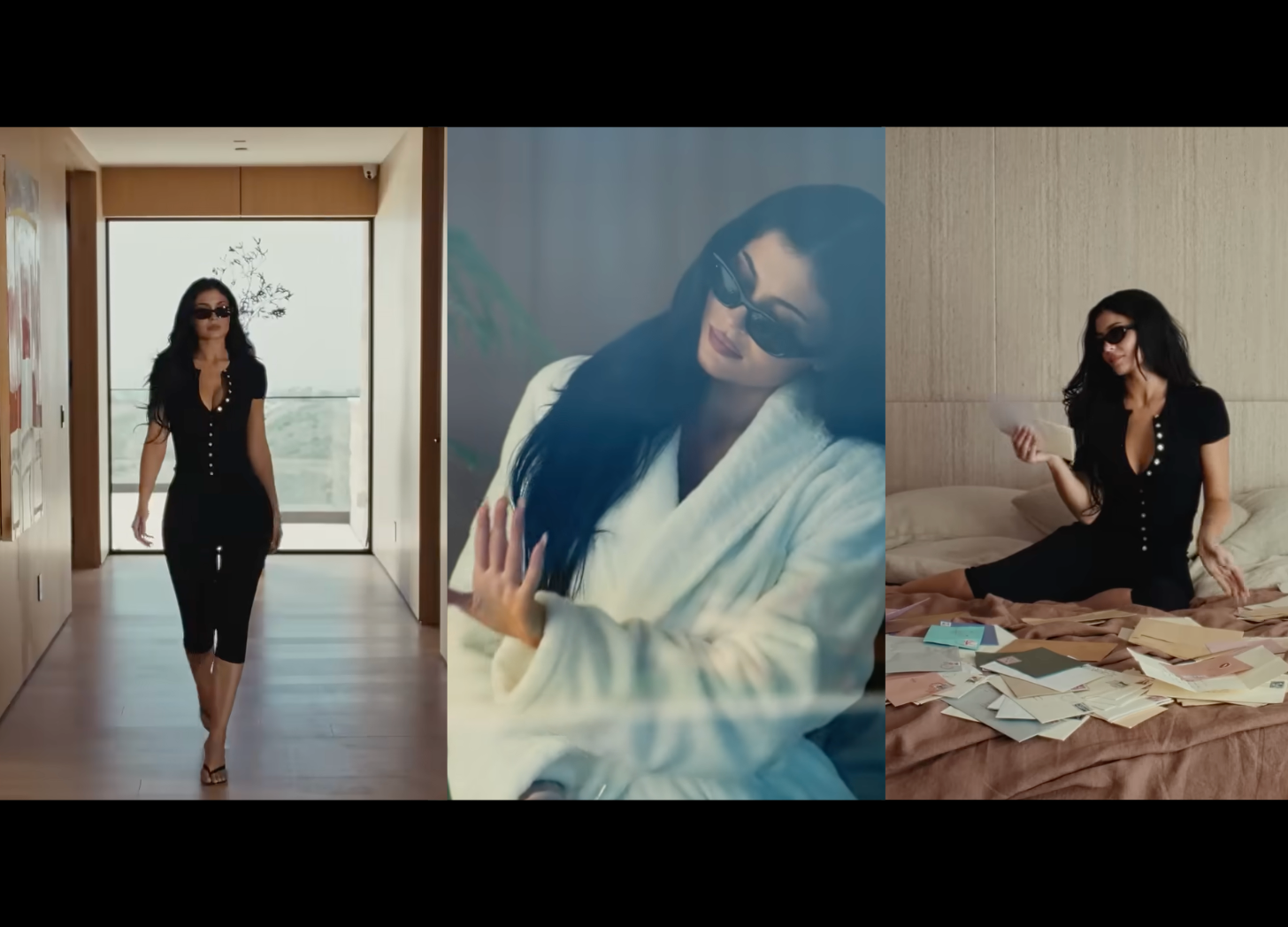
The ad itself makes the same move. It shows Kylie walking through her own home, in a robe checking her nails, on her bed reading fan mail. Every location is private. None of it reads as invasive, which is the entire point.
The pattern nobody at Meta will name
There has been a lot of criticism of Meta glasses surveillance, especially from women, and the documented pattern isn't women recording. It's men using the glasses to record women without their consent. Pedestrian.tv built a piece around this, landing in a moment where women are already being filmed in public without knowing it, and quoted TikTok creator Blue-Eyed Kayla Jade, who argued the campaign was never really about getting women to buy the glasses (Refinery29 covered the same controversy). It was about making everyone else comfortable around the men already wearing them.
And I've experienced a version of this myself. A contractor came into my home wearing the Meta Ray-Ban glasses and filmed inside my private space without asking me first. I didn't get a say in it. That's the piece the marketing skips: the person on the other side of the lens rarely gets asked.
This isn't a one-off claim either. A BBC investigation published in January found dozens of male influencers on TikTok and Instagram using Meta's Ray-Bans to secretly film women for content. One woman, 21, was filmed on her lunch break without her knowledge; the footage hit 1.3 million views and included her phone number. And it goes further than street harassment. In 2024, two Harvard students paired Meta Ray-Bans with a reverse facial recognition engine and large language models to identify strangers in under a minute, retrieving names, home addresses, and phone numbers, then approaching people on the street and the Boston subway using information the strangers never gave them. They called it I-XRAY. EFF's senior technologist, examining Meta's own NameTag code months later, warned it could turn the glasses-wearing public into a distributed surveillance network.
"This is just how celebrity marketing works"
The counterargument worth taking seriously is that brands hire famous women to sell things constantly, and none of it is sinister on its own. Fair. But most celebrity endorsements only have to convince the buyer. This one has to convince everyone else, too, the people who will never own the product but will be recorded by it on the subway, in a bar, at their kid's soccer game. That's a different kind of persuasion job, and it's why the messenger matters more here than it would for a shampoo ad.
Meta also doesn't market these glasses as a surveillance device, and that's precisely the point, not a defense of the product. They're marketed as a creative partner, a hands-free assistant, a fashion accessory with a mirror in the charging case. When Meta's CTO, Andrew Bosworth, was asked about the privacy concerns at a press event, he didn't dispute them. He compared the backlash to the early unease people felt when phones first got cameras, and said plainly that there is, in his words, "this social learning thing that has to happen." He is describing the normalization strategy out loud.
What the target audience is actually saying
I'm the audience this campaign is aimed at: a woman, tech-forward, exactly the demographic Meta is trying to reach. But my read isn't the only one out there, and it's worth showing where other women in that same audience land.
Writer Lauren Wolfe took the opposite position talked to women in her own life who'd been approached on the street by men wearing the glasses, asked strange, specific questions, and later realized they'd been filmed. Meta's response to mounting scrutiny, she argued, hasn't been to limit what the glasses can record. It's been to hire Kylie Jenner.
A Pajiba piece by Kayleigh Donaldson pushed further, ushed further, arguing the campaign is more flop than fix. Most Meta Glasses buyers are still reportedly men, by a wide margin, and the "get ready with me" aesthetic Kylie and other influencers are using to sell the product to women reads to some as shallow rather than reassuring.
The one account that seemed to complicate this was culture journalist Diana Umana's report that the Kylie colorways sold out within days at a Meta creator event, which she read as proof Meta had finally made smart glasses desirable to women, not just useful. Worth sitting with, except Meta's own product page calls this a limited edition, which means a sellout headline was close to guaranteed no matter how many units actually existed to sell. A guaranteed sellout headline is the same mechanism running through the rest of this campaign, manufacturing the appearance of something real.
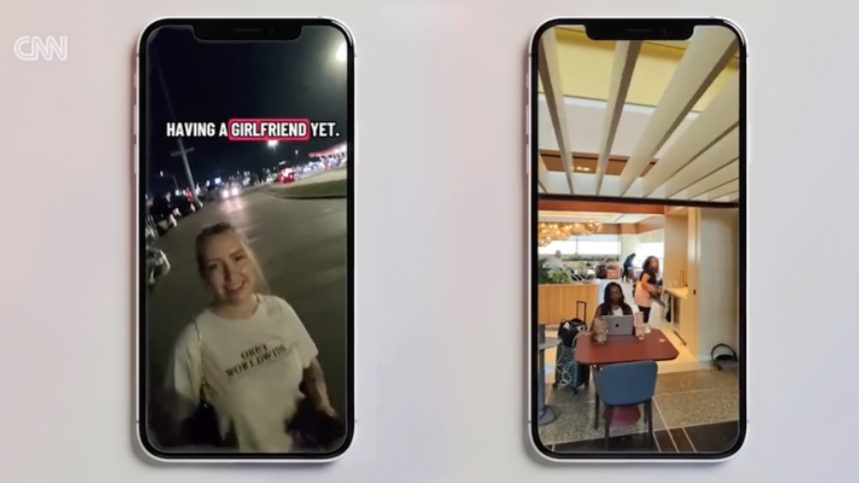
These women didn’t know they were being filmed.
The wider mechanism, if this feels familiar
Meta isn't the only tech company running this play. Reese Witherspoon told her followers that the jobs women hold are 3x more likely to be automated by AI, yet women use AI 25% less than men, framing adoption as something they can't afford to skip. Weeks later, Mel Robbins ran a nearly identical play in a sponsored Microsoft Copilot post, telling women not to fall behind and pushing them to upload bank statements, debt statements, and income documents into the tool. Several cybersecurity researchers publicly warned against it. Although this is a different product, it's the same move. A trusted woman's voice does persuasion work a corporate messenger couldn't do on its own. Commentators have started calling it the girlbossification of AI, adoption framed as a feminist obligation instead of a personal choice. Give it a few months and someone will be calling this the girlbossification of smart glasses.
I do want to be fair to the actual use cases here. Smart glasses can genuinely help people who are blind or low-vision, workers training in high-risk fields, or technicians getting remote guidance on site. Outside of that, I don't think the primary function is helping people. I think it's collecting more data on more of us, wrapped in a face we already trust.
Glamour doesn't cancel out the camera. The question is how many more women get comfortable behind that gem before anyone asks what's actually watching them.
References
Agho, O., McGinnis, B.J., Menges, L.D., (2026, April 9). Smart glasses and privacy: Wearable surveillance and disclosure issues. National Law Review. https://natlawreview.com/article/smart-glasses-and-privacy-wearable-surveillance-and-disclosure-issues
Constantin, A. M. (2026, May 1). Meta cancelled the contract with the people who saw what its glasses see. TheNextWeb. https://thenextweb.com/news/meta-smart-glasses-sama-kenya-workers
Donaldson, K. (2026, July 1). Surveillance for her: Women don't want to buy Meta glasses. Pajiba. https://www.pajiba.com/celebrities_are_better_than_you/surveillance-for-her-women-dont-want-to-buy-meta-glasses.php
Eastern Herald. (2026, June 28). Meta quietly put facial recognition in its smart glasses app. Then someone found it. https://easternherald.com/2026/06/28/meta-smart-glasses-nametag-facial-recognition-privacy-covert-recording/
Holland, H. (2026, July 2). Kylie Jenner’s Meta collab puts a fashionable face on surveillance. MS NOW. https://www.ms.now/opinion/meta-kylie-jenner-glasses-mark-zuckerberg-privacy-concerns
Koetsier, J. (2024, October 3). Meta's Ray-Ban smart glasses used to dox strangers in public, thanks to AI and facial recognition. Forbes. https://www.forbes.com/sites/johnkoetsier/2024/10/03/metas-ray-ban-smart-glasses-used-to-instantly-dox-strangers-in-public-thanks-to-ai-and-facial-recognition/
Krištopaitytė, E. (2026, May 8). Mel Robbins faces a backlash over partnership with Microsoft Copilot. Cybernews. https://cybernews.com/ai-news/mel-robbins-ai/
Mishra, I. (2026, May 14). Kylie Jenner recalls paparazzi calling her a 'F***ing Sl*t'. https://www.realitytea.com/2026/05/14/kylie-jenner-paparazzi-therapuss-with-jake-shane-netflix/
Pasricha, S. (2026, July 6). Why tf do we need consent, Kylie Jenner? Pedestrian.tv. https://www.pedestrian.tv/news/why-tf-do-we-need-meta-glasses-consent-kylie-jenner/
Pasricha, S. (2026, July 7). Meta glasses consent controversy. Refinery29. https://www.refinery29.com/en-au/meta-glasses-consent-controversy
Quintin, C. & Alajaji, R. (2026, June 8). Victory: Meta strips facial recognition code from smart glasses app after public outcry. Electronic Frontier Foundation. https://www.eff.org/deeplinks/2026/06/victory-meta-strips-facial-recognition-code-smart-glasses-app-after-public-outcry
Renner, C. B. (2026, May 22). 'Women use AI 25% less,' Reese Witherspoon says as automation risk grows — 'We don't want to be left behind.' Benzinga. https://www.benzinga.com/news/topics/26/05/52742639/women-use-ai-25-less-reese-witherspoon-says-as-automation-risk-grows-we-dont-want-to-be-left-behind
Umana, D. (2026, July 7). Meta wins the fashion tech war with the Kylie glasses. Yahoo Creators. https://creators.yahoo.com/lifestyle/story/kylie-meta-glasses-are-already-sold-out-meta-just-won-fashion-tech-195858915.html
Wolfe, L. (2026, June 26). Meta thinks Kylie Jenner can fix its glasses problem. Chills, by Lauren Wolfe. https://chills.substack.com/p/meta-thinks-kylie-jenner-can-fix
YouGov. (2026, June 30). Who's ready for smart glasses – and how can brands reach them? https://yougov.com/en-us/articles/52454-whos-ready-for-smart-glasses-and-how-can-brands-reach-them
Zeisler, A. (2026, July 2). Kylie Jenner can't redeem AI glasses. Salon. https://www.salon.com/2026/07/02/kylie-jenner-cant-redeem-ai-glasses/