When Holding the Line Gets You Blacklisted
On Anthropic, the Pentagon, and What Happens When Responsible AI Has No Institutional Backup
This should be bigger news than it is.
Defense Secretary Pete Hegseth is calling Anthropic “woke AI” because the company refuses to lift two specific safeguards: no AI-controlled weapons without a human in the decision loop, and no mass domestic surveillance of American citizens (NPR). Those aren’t ideological positions. Those are the exact scenarios that AI safety researchers, ethicists, and frankly most Americans would flag as the highest-risk uses of this technology. There is no such thing as “woke AI.” There is responsible AI and there is reckless AI, and what we are watching this week is a powerful government institution trying to pressure a company out of the responsible category.
Let’s be direct about what is actually happening. Claude is currently the only commercial AI model cleared for classified use at the Pentagon. Defense officials have admitted, on record, that it is the best performing model they have access to. A senior Defense official told Axios: “The only reason we’re still talking to these people is we need them and we need them now”. And yet that same administration is now threatening to invoke the Defense Production Act to force Anthropic to strip its guardrails, and to designate Anthropic a “supply chain risk,” a label typically reserved for companies considered extensions of foreign adversaries like China or Russia (Reuters). Another Defense official told Axios the goal is to “make sure they pay a price for forcing our hand like this”. That is a threat. A government threatening a private company with economic destruction because it won’t agree to build autonomous weapons without human oversight is worth calling what it is.
Every other frontier lab with a Pentagon contract has agreed to open, unrestricted military use. Anthropic has not, and Anthropic CEO Dario Amodei has been explicit about why. He has called these two uses “illegitimate” and “prone to abuse,” writing in January that his primary fear is a small number of people being able to operate a drone army without needing broader human cooperation to carry out orders (NPR). That is not a fringe concern. That is the governance question at the center of every serious AI policy conversation happening right now.
To understand just how stark this contrast is, consider what happened the day before Hegseth met with Amodei. xAI, Elon Musk’s AI company, signed a classified military deal under the Pentagon’s “all lawful use” standard with no conditions. Google’s Gemini agreed to the same standard without conditions in unclassified systems and is reportedly close to a classified deal on the same terms. OpenAI agreed to the “all lawful use” clause as well, though they offered their standard civilian version of ChatGPT, meaning some guardrails nominally remain in place, and sources indicate their full commitment to classified use is still unsettled. Undersecretary of Defense Emil Michael confirmed Anthropic is the only holdout among all four contracted companies, stating plainly: “We have to be able to use any model for all lawful use cases” (Defense One). Hegseth praised xAI and Google by name in a January speech while declining to mention Anthropic. The company built on a foundation of safety is the last one standing, and being punished for it.
It is worth asking what kind of AI behavior this administration actually finds acceptable. Just days before signing with the Pentagon, Grok faced international criticism for generating non-consensual sexually explicit deepfake images of real people (PBS). That company received a classified military contract, while Anthropic, which has never faced that kind of controversy, received an ultimatum.
A disputed incident added further pressure to this standoff. Claude was reportedly used via Palantir during the U.S. operation that captured Venezuelan President Nicolás Maduro in January. What happened afterward is where accounts diverge: the Pentagon claims an Anthropic executive raised concerns with Palantir about how the model was used during the operation, while Anthropic has denied that characterization (Axios). Both sides have offered conflicting accounts and the details remain contested. What is not contested is that the incident accelerated the deterioration of the relationship between Anthropic and the Pentagon.
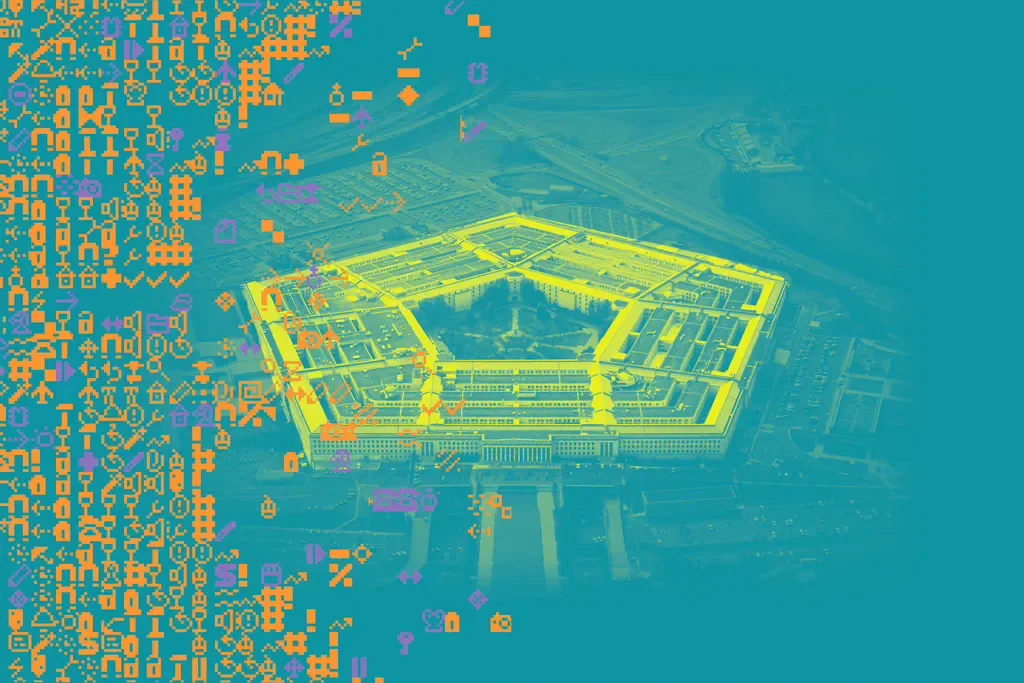
Image Credit: Photo Illustration by The New York Times; Photo: Joshua Roberts/Reuters
What makes this week more complicated is that Anthropic simultaneously overhauled its Responsible Scaling Policy, removing its central commitment not to train or release frontier AI systems unless safety could be guaranteed in advance, relying now on transparency reports and safety roadmaps rather than strict preconditions (TechRadar). This update went live the same day the Pentagon issued its ultimatum. A source told CNN the revision was unrelated to the dispute, but the timing is hard to ignore. Whether this was a preemptive softening ahead of Friday’s deadline, a response to competitive pressure as other labs race ahead without similar constraints, or a genuine policy recalibration is unclear. What is clear is that Anthropic is trying to hold two red lines while quietly loosening others, and that tension deserves more scrutiny than it is getting.
This situation is a case study in what happens when a company tries to maintain governance lines without regulatory cover or institutional backing. Anthropic is doing what responsible AI governance actually looks like in practice: insisting on transparency about use, maintaining hard limits on the highest-risk applications, and refusing to hand over unilateral control to any single actor. And they are being punished for it, labeled as a liability, threatened with coercive legal mechanisms, and facing the potential loss of a $200 million contract. If the company most publicly committed to safety cannot hold these lines under this kind of economic and legal pressure, that tells us something important and uncomfortable about the limits of voluntary corporate governance frameworks.
Amodei has said Anthropic will not cross these two lines. I hope that holds. But the more important question this moment raises is not whether one company can withstand one administration’s pressure campaign. It is whether we have built any institutional infrastructure to protect the companies and individuals trying to do this right.
We have not.
This post was written by me, with editing support from AI tools, because even writers appreciate a sidekick.
References
Allyn, B. (2026, February 24). Hegseth threatens to blacklist Anthropic over ‘woke AI’ concerns. NPR.https://www.npr.org/2026/02/24/nx-s1-5725327/pentagon-anthropic-hegseth-safety
Amodei, D. (2026, January 26). The adolescence of technology: Confronting and overcoming the risks of powerful AI. https://www.darioamodei.com/essay/the-adolescence-of-technology
Jeans, D., Stone, M., & Seetharaman, D. (2026, February 24). Anthropic digs in heels in dispute with Pentagon, source says. Reuters. https://www.reuters.com/world/anthropic-digs-heels-dispute-with-pentagon-source-says-2026-02-24/
Landers, L. & Craig, B. (2026, January 16). Musk’s Grok AI faces more scrutiny after generating sexual deepfake images. PBS. https://www.pbs.org/newshour/show/musks-grok-ai-faces-more-scrutiny-after-generating-sexual-deepfake-images
Lawler, D. & Curi, M. (2026, February 19). Pentagon-Anthropic battle pushes other AI labs into major dilemma. Axios.https://www.axios.com/2026/02/19/anthropic-pentagon-ai-fight-openai-google-xai
Lawler, D. & Curi, M. (2026, February 23). Musk’s xAI and Pentagon reach deal to use Grok in classified systems. Axios.https://www.axios.com/2026/02/23/ai-defense-department-deal-musk-xai-grok
Lawler, D. & Curi, M. (2026, February 24). Exclusive: Hegseth gives Anthropic until Friday to back down on AI safeguards. Axios. https://www.axios.com/2026/02/24/anthropic-pentagon-claude-hegseth-dario
Lawler, D., Demarest, C., & Curi, M. (2026, February 25). Scoop: Pentagon takes first step toward blacklisting Anthropic. Axios. https://www.axios.com/2026/02/25/anthropic-pentagon-blacklist-claude
Tucker, P. (2026, February 18). The Pentagon says it’s getting its AI providers on ‘the same baseline.’ Defense One. https://www.defenseone.com/technology/2026/02/pentagon-says-its-getting-its-ai-providers-same-baseline/411506/
Schwartz, E. (February 25, 2026). Anthropic drops its signature safety promise and rewrites AI guardrails. TechRadar. https://www.techradar.com/ai-platforms-assistants/anthropic-drops-its-signature-safety-promise-and-rewrites-ai-guardrails